
Sleep Apnea Continuous Positive Airway Pressure: What CPAP Means for Care
Learn how continuous positive airway pressure treats sleep apnea, what CPAP involves, and when a custom oral appliance may be considered.

Sleep apnea continuous positive airway pressure therapy is often called CPAP. It uses a machine and mask to deliver pressurized air during sleep, helping keep the upper airway open. If you have been diagnosed with obstructive sleep apnea (OSA), understanding what CPAP does—and what questions to raise if it is difficult to use—can help you have a more informed conversation with your care team.
Request information about treatment options
What does continuous positive airway pressure mean?
Continuous positive airway pressure describes the steady air pressure delivered through a CPAP mask while a person sleeps. The equipment typically includes a machine, tubing and a mask or nasal interface. A clinician helps determine the prescribed settings and equipment. The purpose is to support the airway while it is in use; CPAP is not simply room air, and it is not a dental appliance.
Obstructive sleep apnea involves repeated narrowing or closure of the upper airway during sleep. CPAP provides pressure intended to help hold that airway open. The treatment approach, equipment and settings should be discussed with the clinician managing your sleep apnea. General information from the National Heart, Lung, and Blood Institute can offer background on sleep and health, but it does not replace personal medical advice.
CPAP does not make a sleep apnea diagnosis. A qualified medical professional evaluates and diagnoses OSA, often using a sleep study as part of the assessment. Sleep Apnea Dental Center does not diagnose OSA or conduct sleep studies. Its formal OSA referral pathway begins after a physician has diagnosed the condition.
What is CPAP treatment like in everyday life?
CPAP is used during sleep, so the fit and feel of the mask and the routine around the equipment matter to the person using it. People may have questions about mask comfort, pressure, equipment care, travel or how to address problems with use. Those concerns are worth taking to the prescribing clinician or equipment provider rather than changing treatment settings on your own.
Some patients find CPAP useful and continue with it. Others have difficulty tolerating the mask or incorporating the equipment into their routine. That experience does not mean that CPAP is wrong for everyone, nor does it establish that a different option will suit a particular person. A clinician can review the diagnosis, treatment history and individual circumstances with you.
It can help to separate the treatment itself from the practical details of using it. A mask-fit concern, trouble getting used to the routine, or questions about equipment should be described as specifically as possible to the care team. The right person to contact can depend on the issue: your physician or sleep clinician can discuss the treatment plan, while your equipment provider may be able to address equipment questions. If you are unsure who handles a concern, ask the clinician who prescribed CPAP where to direct it. Avoid making adjustments to the machine based on general online advice.
Some patients also want to understand what happens when they travel or change their sleeping routine. Bring those questions to the clinician or equipment provider, who can advise based on the equipment and treatment plan you use. A practical concern is still a valid clinical conversation; it does not by itself establish that another treatment is more effective or appropriate for you.
If CPAP has been hard to use, note what specifically is challenging. For example, is the concern the mask, the sensation of pressure, the equipment routine, or something else? A clear description gives your care team a starting point. For more on discussing treatment concerns, see what to tell your clinician about CPAP side effects. This information is not a substitute for assessment of an urgent or worsening health concern.
How does CPAP compare with an oral appliance?
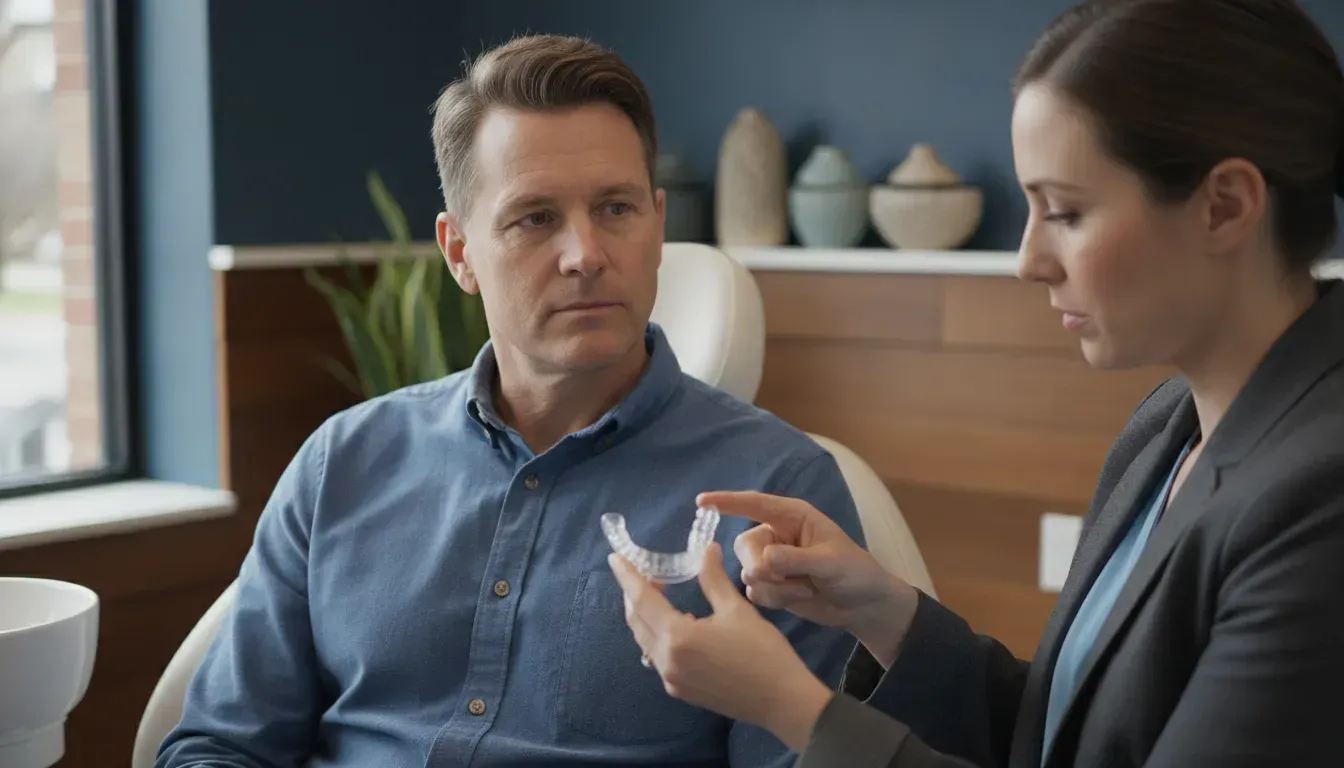
CPAP and an oral appliance are different forms of treatment. CPAP uses a machine, tubing and mask to deliver air pressure. A sleep apnea oral appliance is a custom device worn in the mouth during sleep. Sleep Apnea Dental Center describes oral appliances as an option for people with diagnosed OSA, including some who have difficulty tolerating CPAP. A qualified clinician evaluates whether this approach is appropriate for the individual; it is not a generic mouthguard chosen from a shelf.
The comparison is not a contest with one answer for every patient. Your diagnosis, clinical history, preferences, oral health and ability to use a treatment are among the subjects to discuss with the relevant clinicians. The practice says it selects appliances around individual needs, including considerations such as clenching or grinding. That does not mean every appliance accommodates every concern or that a particular outcome is assured.
When reviewing options, compare the care pathway as well as the device. Ask who is responsible for each part of care, how the treatment is selected, and what follow-up questions you should bring back to the clinician. For CPAP, clarify the instructions and support available for the equipment you have been prescribed. For an oral appliance, ask how a clinician evaluates fit and whether your oral health or history affects candidacy. These questions help set realistic expectations without assuming the same process or result for every person.
It is also useful to tell both your physician and dental sleep medicine clinician about other treatment steps you are taking. That gives the care team a clearer picture of your situation and helps you understand who to contact with new questions. Do not treat a comparison article as a substitute for the clinical assessment that connects an option to your diagnosis.
QuestionCPAPCustom oral applianceWhat is worn or used?A mask or nasal interface connected by tubing to a pressure-delivery machine.A custom device worn in the mouth during sleep.How does it work?Delivers positive air pressure intended to help keep the airway open.Is selected and fitted by a clinician as an oral-appliance treatment approach for an appropriate patient.Who guides the treatment?The clinician who manages the sleep apnea and the equipment-care team, as applicable.A qualified medical professional establishes the OSA diagnosis; a dental sleep medicine clinician evaluates oral-appliance care and coordinates as appropriate.What should a patient compare?Mask and equipment comfort, routine, clinician guidance and experience using the prescribed treatment.Individual suitability, oral health considerations, fitting and follow-up questions for the treating team.
This overview is a starting point, not an individualized treatment recommendation. For a fuller discussion of similarities and differences, read the practice's oral appliance comparison. It explains the choices in more detail without deciding which is appropriate for you.
When might an oral appliance be discussed?
A patient with physician-diagnosed OSA who has trouble tolerating CPAP may ask the care team whether an oral appliance is worth evaluating. The practice describes custom oral appliances as both a treatment pathway and an option for some patients who do not want or tolerate CPAP. That description is not a promise that an appliance will work for everyone, replace CPAP in every situation, or provide a cure.
Evaluation is individualized. A dental sleep medicine clinician considers the person's situation and whether an oral appliance is a suitable option. Questions about the diagnosis and overall sleep-apnea management belong with the physician or sleep clinician as well. The dental practice works within that broader care pathway; it does not replace physician diagnosis or sleep testing.
Read more about custom oral appliances for sleep apnea to understand the practice's treatment focus. The page is information about a clinical service, not a do-it-yourself guide or a catalog that establishes a specific device's availability, price or insurance coverage.
What steps can help you prepare for a treatment conversation?
- Confirm what you know about the diagnosis. Keep a copy of your sleep-study information and the name of the physician who diagnosed OSA, if available. Ask the clinician managing your sleep apnea which records are useful to bring.
- Describe your CPAP experience clearly. Explain what is manageable and what is difficult, how long you have tried the prescribed approach, and whether you have already raised concerns with your care team. Do not stop or change prescribed treatment without discussing it with the clinician responsible for your care.
- Ask about the purpose and trade-offs of each option. Find out what the clinician recommends for your situation, what using the treatment involves, and how the care team will assess whether the plan is suitable.
- Ask how oral-appliance evaluation works. If you are considering this route, ask what information the dental sleep medicine practice needs and what evaluation and follow-up may involve. The process depends on your circumstances; this guide does not set a visit count or timeline.
- Clarify cost and coverage directly. The practice says it checks medical-insurance approval before the visit so patients can understand possible out-of-pocket cost. Coverage and payment are plan-specific, and authorization is not a guarantee of payment. Ask the office about your own benefits rather than relying on a general statement.
Writing down your questions beforehand can make a short appointment conversation more useful. For example: “What should I do if I cannot use my current treatment comfortably?” “What records do you need?” “How would we decide whether an oral appliance fits my case?” and “Who should I contact if I have a problem with treatment?”
How does evaluation work at a dental sleep medicine practice?
For OSA care, the medical diagnosis comes first. A person who wants a dental evaluation for an oral appliance should be prepared to share the physician's diagnosis and relevant sleep-study information, and to ask the practice what records are needed. A dental evaluation considers oral and treatment-related factors; it does not replace the physician's role in diagnosing or managing sleep apnea.
Sleep Apnea Dental Center serves the greater Pittsburgh area through offices in Moon Township, Cranberry Township and Monroeville. The location that is convenient for you may depend on the days each office sees patients, so confirm availability when arranging a visit. The practice reports clinical hours of 8:30 a.m. to 3:30 p.m. on assigned days: Moon Township Wednesday and Thursday; Cranberry Township Monday, Tuesday and Friday; and Monroeville Wednesday through Friday. These are not identical schedules at each office.
If you have a physician-diagnosed sleep apnea condition and want to ask about an appointment, the appointment request page is the patient contact route. Submitting a request is not a booked visit. The office says staff contact requesters within one to two business days to arrange an appointment. People with questions about whether their records or situation meet the practice's intake requirements can ask the office directly.
When you contact the office, you can state that you have an OSA diagnosis, explain that you are exploring an oral-appliance evaluation, and ask which records to provide. If you are currently using CPAP, it may help to summarize what you have tried and what remains difficult. Keep the request focused on arranging a conversation; staff follow up to schedule rather than confirming a treatment decision through the form. Appointment availability and the clinical schedule vary by location, so confirm the details with the office instead of assuming every clinician or location has the same hours.
If you are coordinating with a physician, ask how information about an evaluation or treatment plan should be shared. A referral or a patient-initiated request does not change who established the diagnosis. Clear communication can help you and your clinicians keep the responsibilities of the medical and dental parts of care distinct.
What if the concern is snoring rather than diagnosed sleep apnea?
Snoring alone does not establish whether a person has OSA. The practice says non-apneic snoring is considered only after a sleep study rules out apnea. If you have not been assessed, talk with a qualified medical professional about whether an evaluation or sleep study is appropriate. Do not assume that an oral appliance for snoring is the right next step before apnea has been considered.
For more context, the practice explains sleep apnea symptoms and treatment. Symptoms and observations can help a clinician understand what is happening, but a list of symptoms cannot confirm a diagnosis. If OSA is suspected, seek medical evaluation rather than trying to determine the condition from symptoms alone.
Frequently asked questions
Is CPAP the same thing as an oral appliance?
No. CPAP uses a machine and mask or nasal interface to deliver positive air pressure. An oral appliance is a custom device worn in the mouth. They are distinct approaches, and suitability depends on the individual and clinical assessment.
Does difficulty using CPAP mean I should stop?
Do not stop or change prescribed treatment on your own. Tell the clinician managing your sleep apnea what is difficult and ask what steps or alternatives may be appropriate in your case.
Can a dentist diagnose sleep apnea?
Sleep Apnea Dental Center does not diagnose OSA or conduct sleep studies. The practice's formal OSA referral pathway requires a qualified physician's diagnosis. Dental sleep medicine evaluation can address oral-appliance treatment after diagnosis, in coordination with the broader care team.
Will an oral appliance work for every person who cannot tolerate CPAP?
No treatment should be assumed to suit everyone. A clinician must evaluate whether an oral appliance is appropriate for your individual circumstances. The practice describes it as an option for some people with OSA who have trouble tolerating CPAP, not as a guaranteed result or universal replacement.
What should I bring to an appointment request?
Have the name of the physician who diagnosed OSA and any sleep-study records available, and ask the office what it needs. If you are still working with your physician to establish a diagnosis, ask that clinician about the appropriate next step before seeking OSA treatment.
Request an appointment to discuss oral-appliance evaluation
CPAP and custom oral appliances serve different roles in sleep apnea care. A conversation with your physician and, when appropriate, a dental sleep medicine clinician can help you understand which options deserve consideration for your diagnosis and needs.