
Sleep Apnea and High Blood Pressure
High blood pressure can be developing quietly, while obstructive sleep apnea repeatedly interrupts breathing during sleep. When both appear, the connection deserves medical attention rather than guesswork. Measuring blood pressure and discussing symptoms with a physician are important first steps.
Call (412) 367-0367 to ask what a dental visit requires after a physician has diagnosed obstructive sleep apnea.
Sleep apnea and high blood pressure can occur together because repeated breathing interruptions and drops in oxygen may place strain on the cardiovascular system. Sleep apnea is linked with a higher chance of hypertension. Treating apnea is not a promise that blood pressure will fall for every person. A qualified physician must evaluate and diagnose apnea, often with a sleep study. NHLBI explains the condition and its health risks.
Snoring, witnessed breathing pauses, morning symptoms, or blood pressure that is hard to control are reasons to talk with your physician. The link is not a single simple cause. The next section looks at what happens in the body during sleep.
Why sleep apnea and high blood pressure show up together
These two problems often show up in the same person. That does not mean one always causes the other. Sometimes a blood-pressure diagnosis comes first, and interrupted breathing turns up later. Sometimes a sleep evaluation comes first, and blood pressure needs attention too.
Obstructive sleep apnea repeatedly narrows or blocks the airway during sleep. Those breathing interruptions can affect oxygen levels and place stress on the body. NHLBI describes obstructive sleep apnea as repeated stops and starts in breathing that lower oxygen. And it links untreated sleep apnea with a higher risk of heart attack and stroke. Blood pressure that stays high despite medicine is another reason to ask whether sleep is part of the picture. Group findings do not predict what will happen for one person.
Blood pressure can also be easy to overlook because it often causes no symptoms. The NHLBI says high blood pressure means a reading that stays at or above 130/80 mm Hg. It often has no symptoms, so measuring it is how you know where you stand. A person can feel well and still need a proper blood-pressure check.
The practice lists high blood pressure among the conditions it associates with snoring and sleep apnea. That listing is a reason to share symptoms and diagnoses with your physician, not a reason to assume that either condition explains every symptom. A clinician can then consider the full picture, including sleep symptoms, blood-pressure history, and any testing already completed.
What repeated breathing pauses do overnight
Obstructive sleep apnea is not simply loud snoring. During sleep, breathing repeatedly stops and starts, which can lower the amount of oxygen reaching the body. In the most common form, the throat airway becomes blocked as you sleep. The pauses may be brief, but they can happen again and again through the night. The NHLBI explains how sleep apnea affects breathing and oxygen.
Each pause can push the body to wake just enough to reopen the airway, even if you do not remember it. Heart rate may rise, and blood vessels may tighten for a moment. When that happens again and again, it puts extra strain on the heart and blood vessels. That is one reason sleep apnea and high blood pressure are often discussed together. High blood pressure may have no obvious symptoms. Do not use an overnight breathing problem to explain away a reading or to skip regular medical care.
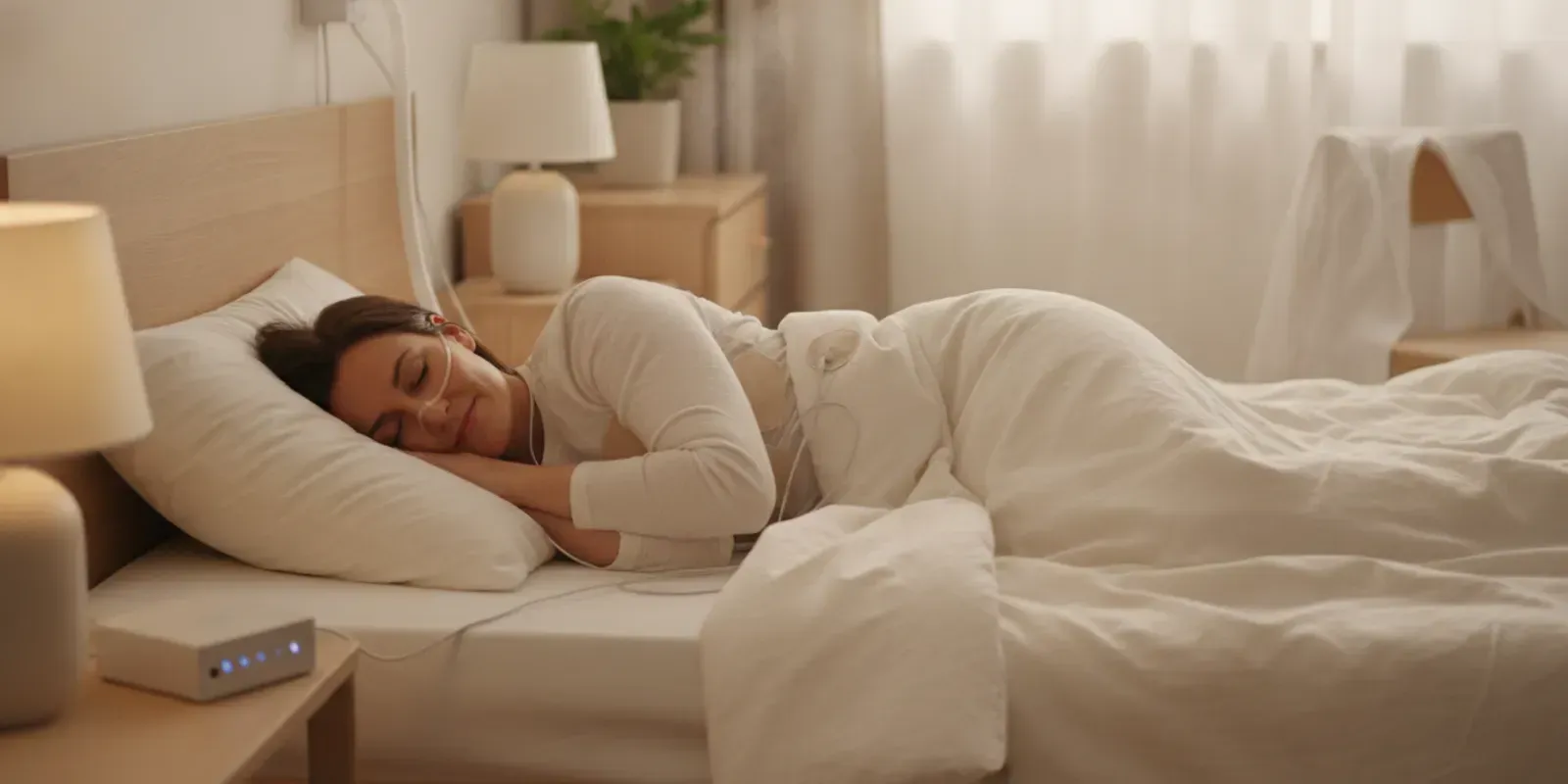
The relationship is important, but it is not a promise that treating sleep apnea will resolve blood pressure for every person. A physician may review your symptoms, medical history, and blood pressure, then order a sleep study when appropriate. A sleep study is how a physician confirms whether sleep apnea is present and helps determine its severity.
Sleep Apnea Dental Center does not diagnose obstructive sleep apnea and does not run sleep studies. The practice provides dental sleep medicine after a qualified physician has diagnosed OSA. Referring clinicians can review the requirements for a physician diagnosis before a dental referral. If you are concerned about pauses in breathing, gasping, persistent snoring, or blood pressure, start with your physician.
When to ask a physician for an evaluation
Talk with a physician if your blood pressure stays high even when you take medicine as prescribed. Loud snoring or waking up gasping makes that conversation more urgent. Daytime sleepiness and morning headaches are other reasons to bring up sleep. The practice education page lists those symptoms and lists high blood pressure among disorders associated with snoring and sleep apnea.
One NHLBI-funded study looked at African American adults with untreated sleep apnea. In that group, moderate or severe sleep apnea was linked with about twice the chance of hard-to-control hypertension. Severe sleep apnea was linked with about 3.5 times the chance, compared with people who did not have sleep apnea. The study did not find a clear link for mild sleep apnea. Those numbers describe one group of adults. They are not a risk score for every person. Read the NHLBI study summary.
A sleep study is needed to determine whether apnea is present. A physician can review your blood-pressure history, symptoms, medications, and other health factors, then decide what evaluation is appropriate. If a sleep study rules out apnea but snoring is still disruptive, that result can guide a separate discussion. The practice offers care for non-apneic snoring only after a sleep study rules apnea out. Sleep Apnea Dental Center does not diagnose sleep apnea, so a qualified physician must establish an obstructive sleep apnea diagnosis before the practice accepts a referral.
Before the appointment, consider asking:
- Could my persistent high blood pressure and nighttime breathing symptoms be related?
- Should I have a sleep study, and what type is appropriate?
- What should I track about my blood pressure, sleep, snoring, or daytime fatigue?
- Could any of my medications or other health conditions be contributing?
An evaluation can clarify what is happening. It cannot promise that treating sleep apnea will normalize blood pressure, so continue following your physician's advice about monitoring and medication.
What to bring to that visit
- A short list of blood-pressure readings, including the time of day and whether you had taken medication.
- Notes on snoring, gasping, witnessed pauses, morning headaches, and daytime sleepiness.
- Your current medication list, including anything prescribed for blood pressure.
- Any prior sleep-study report, if you have one, so the physician is not starting from a blank page.
What treatment can and cannot change
Treating obstructive sleep apnea may ease one source of strain on the heart and blood vessels. It is not a promise that blood pressure will land in a set range. Some adults who use CPAP over time see lower blood-pressure readings. That change is not guaranteed, and it is not a reason to stop medicine on your own. Oral appliances may also be discussed after a physician diagnosis, but they are not a promise that blood pressure will fall. NHLBI lists CPAP among treatments a physician may consider, along with other options that depend on the person.
Blood-pressure medicine should remain under the direction of the physician who manages it. Do not stop, reduce, or change medication because sleep-apnea treatment has started. Regular checks and follow-up help your medical team see whether the overall plan is working.
After that diagnosis, Sleep Apnea Dental Center can discuss custom oral appliances worn during sleep. These devices reposition the lower jaw and tongue to help open the airway. The doctor chooses the appliance for that person. Some people have had trouble using CPAP. Others also clench, grind, or have jaw discomfort or headaches. Read how the practice describes custom oral appliances.
An oral appliance does not cure sleep apnea, replace physician-directed blood-pressure care, or substitute for a diagnosis. The practice accepts referrals only after a qualified physician has diagnosed obstructive sleep apnea. Offices in Moon Township, Cranberry Township, and Monroeville do not each see patients every weekday. Phones are answered weekdays from 8:30 a.m. to 4 p.m.
When a sleep-apnea diagnosis is already in place, the office checks medical-insurance approval before the visit. That way you know the expected out-of-pocket cost. That check is not a promise that every plan, device, or severity is covered, and an authorization is not a guarantee of payment. Details are on the insurance page. The practice does not publish a fee schedule.
How the roles differ
| Question | Physician and sleep study | Sleep Apnea Dental Center |
|---|---|---|
| Who decides whether apnea is present? | A qualified physician, often using a sleep study. | The practice does not diagnose apnea and does not run sleep studies. |
| Who manages high blood pressure? | The physician who prescribes and monitors blood-pressure care. | The practice does not change blood-pressure medication or promise a lower reading. |
| When can an oral appliance be discussed? | After obstructive sleep apnea has been diagnosed. | After that diagnosis, the practice can review a custom appliance, including when CPAP has been hard to use. |
| What about snoring without apnea? | A sleep study has to rule apnea out first. | Non-apneic snoring care is offered only after that study. |
The table is a map of responsibility, not a treatment menu. Many people with both conditions still need CPAP, weight-related medical care, or a change in blood-pressure medicine that only a physician can direct. An oral appliance is one practice-described option for diagnosed obstructive sleep apnea, chosen for the individual. It is not a cure, and it is not presented as the right device for every severity.
People sometimes ask whether a home blood-pressure cuff can stand in for a sleep evaluation. It cannot. A cuff tells you the force of blood against the artery wall at that moment. It does not show whether the airway is closing overnight. The reverse is also true. A conversation about snoring does not replace a blood-pressure measurement. The NHLBI notes that many adults with hypertension do not know they have it. Bring both pieces of information to the physician instead of treating one as a substitute for the other.
Greater Pittsburgh patients are seen at Moon Township, Cranberry Township, and Monroeville, but clinical days differ by office. Moon Township sees patients on Wednesday and Thursday. Cranberry Township sees patients on Monday, Tuesday, and Friday. Monroeville sees patients on Wednesday, Thursday, and Friday. Clinical hours on those days are 8:30 a.m. to 3:30 p.m. Calling the main number is the reliable way to confirm which office is seeing patients, rather than assuming every location is open every weekday.
Frequently Asked Questions
Can sleep apnea cause high blood pressure?
Sleep apnea can add to high blood pressure, but the link is not the same for everyone. Repeated pauses and drops in oxygen can stress the heart and blood vessels. NHLBI links untreated sleep apnea with higher heart and stroke risk. Symptoms, or blood pressure that stays high on medicine, are good reasons to ask a physician about an evaluation.
Should I see a doctor before contacting a dental sleep practice?
Yes. A qualified physician must diagnose obstructive sleep apnea before Sleep Apnea Dental Center accepts an OSA referral. Diagnosis often involves a sleep study, and a dental sleep practice does not replace that medical evaluation. If you have high blood pressure, ask your physician how it is being monitored and whether a sleep evaluation is appropriate.
Can an oral appliance lower my blood pressure?
An oral appliance may help manage diagnosed obstructive sleep apnea by repositioning the lower jaw and tongue to help keep the airway open during sleep. Research suggests oral appliances may improve hypertension when they relieve apnea, but that is not a guaranteed result for an individual. Keep taking prescribed blood-pressure medicine and follow your physician's monitoring plan.
What can a dental sleep practice do after I am diagnosed?
After a physician diagnosis, the practice can evaluate whether a custom oral appliance is an appropriate option, especially if CPAP has been hard to use. Selection is individual and can account for clenching, grinding, jaw discomfort, and headaches. The practice does not diagnose apnea, run sleep studies, or promise that an appliance will cure apnea or normalize blood pressure. You can request an appointment after that diagnosis. Staff contact you within 1 to 2 business days to set up the visit. That window is not a treatment timeline.
Talk with the practice after a diagnosis
Sleep Apnea Dental Center does not diagnose sleep apnea. It also does not replace the physician who manages your blood pressure. If a qualified physician has already diagnosed obstructive sleep apnea, the practice can talk through whether a custom oral appliance is a reasonable next step. That includes cases where CPAP has been hard to use.
Call (412) 367-0367 on weekdays from 8:30 a.m. to 4 p.m., or request an appointment. The form is a request, not a booked visit. Staff contact you within 1 to 2 business days to set up an appointment.