
How to Stop Snoring While Sleeping
How to stop snoring while sleeping starts with side sleep, a clear nose, and a two-week check. Pause if breathing pauses show up.
How to stop snoring while sleeping is a bedtime question, not a diagnosis. Snoring is the sound of air moving through a narrowed throat while the jaw drops and the tongue falls back. Some nights that sound is only position, a stuffy nose, or a drink too close to bed. Other nights it rides along with breathing that stops and starts. Those are different problems, and a pillow cannot sort them.
Request an appointment if a sleep study has already ruled apnea out and snoring is still the issue, or call (412) 367-0367. Staff contact you within 1 to 2 business days to set the visit. That call is a request, not a booked time, and it is not a free consultation.
Sleep Apnea Dental Center does not diagnose sleep apnea and does not run sleep studies. The practice sees people across the Pittsburgh area from Moon Township, Cranberry Township, and Monroeville. It offers custom oral appliances for diagnosed obstructive sleep apnea, and it offers help for non-apneic snoring only after a sleep study rules apnea out. This page stays on the in-bed sequence you can try when nobody has seen breathing pauses. For the longer answer on when the noise needs a medical look, use the practice's snoring treatment guidance.
How to stop snoring while sleeping, one change at a time
Do not change five things on the same night. You will not know which one mattered. Pick the step that matches what a partner, or a phone recording, already shows. Give that step a fair trial before you add the next.
The National Heart, Lung, and Blood Institute lists side sleeping, a steady sleep schedule, and limiting alcohol among the lifestyle steps used alongside medical care for sleep apnea. Those same steps are the reasonable first tries for simple snoring. They are not a test for apnea, and they are not a treatment plan.
- Sleep on your side if the sound is louder on your back.
- Raise the head of the bed a few inches if the neck stays straight.
- Clear the nose before lights out, then keep the room from getting very dry.
- Move alcohol earlier, or skip it, for two weeks.
- Keep a regular bedtime so the other changes are easier to judge.
- Stop the experiment if breathing pauses, gasping, or daytime sleepiness show up.
Write one line in the morning. Note the position, whether drinks were involved, and whether you woke rested. A short note beats a vague memory when you later talk with a clinician.
Start with the position you actually sleep in
On your back, the jaw relaxes and the tongue is more likely to fall toward the airway. Moving air then vibrates the soft tissue. That is the mechanism the practice describes on its sleep apnea education page: the jaw opens, the tongue falls back, and the smaller opening makes the sound.
Side sleeping keeps more of that space open for many people. A body pillow behind the back makes rolling onto the back less automatic. A tennis ball sewn into a shirt is an old trick with the same idea. It is a reminder, not a medical device, and it is a poor plan if you already wake gasping.
Some people do better with the head of the bed raised a few inches, using blocks under the frame or a wedge that keeps the neck in line. A pile of soft pillows that bends the neck can make the airway worse, not better. If side sleeping quiets the room and mornings feel normal, stay with it. If the sound drops but you still wake unrefreshed, position was not the whole story.
Clear the nose before you blame the throat
A blocked nose pushes breathing through the mouth. Mouth breathing lets the jaw drop, which is the same setup that makes snoring louder. Rinse with saline if your own clinician has said that is fine for you. Treat allergies through that clinician, not with a new stack of sprays from the store.
Nasal strips change the nose. They do not hold the tongue forward, so they will not fix snoring that only happens when you roll onto your back. A very dry room can add to the scratchy sound. A humidifier is reasonable if the air is dry. It is not a reason to ignore choking or witnessed pauses.
Mouth tape shows up in a lot of bedtime tips. Skip it if you cannot breathe well through your nose. Tape does not tell you whether breathing is stopping, and it can make a blocked nose harder to manage.
Set the two hours before bed
Alcohol relaxes the muscles that hold the throat open. Snoring often gets louder in the hours after drinks, even in people who are quiet on other nights. For a clean test, keep alcohol away from the two hours before sleep for two weeks. If the sound fades on those nights and returns when drinks move later again, you have a useful clue. You do not have a diagnosis.
Very short nights and erratic bedtimes leave you more deeply relaxed when you finally sleep. The airway can narrow more on those nights. A regular window will not open a blocked throat, but it makes the position and alcohol tests easier to read.
Sleep aids and other sedating medicines can loosen throat muscles too. Do not stop a prescribed medicine because a blog said so. Ask the clinician who ordered it whether nighttime breathing changes what you should take.
Extra tissue around the neck can narrow the airway, and many people snore less after weight loss. Many people at a healthy weight still snore. A number on the scale is not proof that apnea is gone. And it is not a reason to skip a sleep study when red flags are already there.
What to try tonight, and what to leave on the shelf
Match the change to the pattern. If you try a store product, know what it can and cannot tell you. None of these steps replace a sleep study when breathing is already pausing.
| What you notice | Try tonight | Leave this for later |
|---|---|---|
| Louder on your back, quiet on your side, and you feel rested. | Side sleeping, with a body pillow so you stay there. | A boil-and-bite mouth guard from a pharmacy. |
| The neck kinks on a tall stack of pillows. | A small, steady incline at the head of the bed. | More soft pillows that bend the neck. |
| Stuffy nose or a very dry room. | Saline if your clinician agrees, plus less-dry air. | Mouth tape when the nose is blocked. |
| Louder after evening drinks. | Move alcohol earlier, or skip it, for two weeks. | A new device before you have tested the timing. |
| A partner hears pauses, gasping, or choking. | Stop the home test and talk with a medical clinician. | Another week of gadgets while you wait. |
| A completed study found no apnea, and snoring remains. | Ask whether a custom oral appliance is even a fit. | Assuming a store guard is the same thing. |
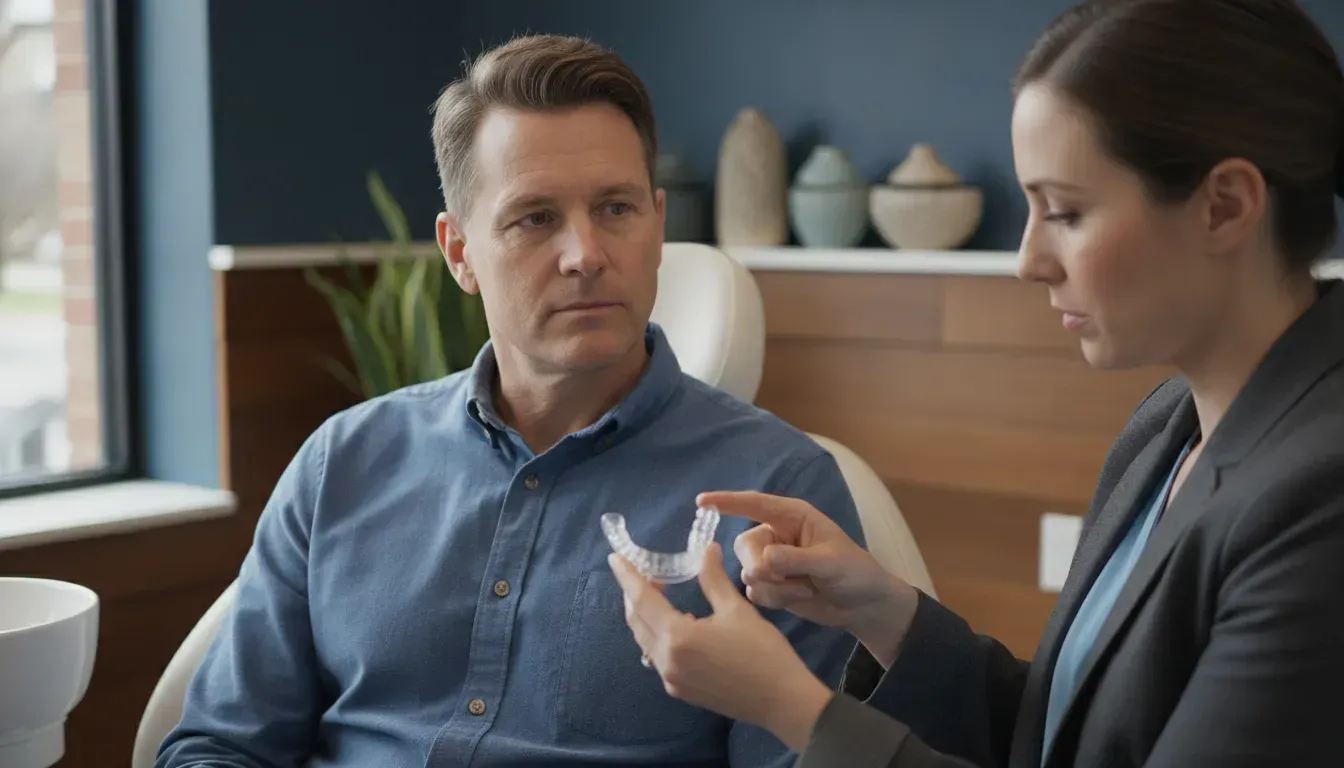
Chin straps and throat sprays are common online. They do not measure whether breathing is stopping. A custom oral appliance, when one is chosen later, is made for your bite. It is not the same object as a boil-and-bite guard, and this practice does not offer one until the study question is answered.
How to judge two quiet weeks
Give one change two weeks if nobody has seen breathing pauses and you are not sleepy during the day. Use the morning note. You are looking for two things at once: a quieter night, and a morning that feels rested.
If both improve, you may be dealing with simple, position-related snoring. Keep the habit. Recheck if the sound returns, if someone newly hears gasping, or if daytime sleepiness shows up. A good two weeks is not a lifetime pass.
If the room is quieter but mornings stay foggy, the habit did not answer the medical question. Loudness was never the only clue. The National Heart, Lung, and Blood Institute describes obstructive sleep apnea as repeated stops and starts in breathing during sleep, often with loud snoring and gasping. A dentist cannot see that pattern from a bedtime experiment. A sleep study can.
Stop the sequence and talk with a physician or your primary care clinician if breathing stops and restarts. The same is true if you wake choking, or if you are sleepy while reading or driving. Do not add another pillow while you wait. The practice's snoring guide covers those warning signs in more detail, and it explains why the study comes before any snoring device.
When the bedtime steps are no longer the point
Three situations move you off this page and onto a clinical conversation. They are not three versions of the same device.
First, a partner has watched breathing pause, or you wake gasping. That is a reason for a medical visit and, often, a sleep study. Sleep Apnea Dental Center will not make that call from a recording or a symptom list. The study is what shows whether breathing is pausing and how often.
Second, a physician has already diagnosed obstructive sleep apnea. Care starts with that physician's plan. CPAP is a common treatment. People who have trouble tolerating CPAP sometimes use a custom oral appliance instead. The practice describes that as an option chosen for the person, including clenching or grinding. It is not a claim that an appliance cures apnea or replaces CPAP for everyone. The NHLBI treatment overview says treatment is fitted to the person and does not promise a cure.
Third, a completed study found no apnea, and snoring is still disrupting sleep or a relationship. That is the non-apneic path. The oral appliances page says the dentists can help people whose snoring is not tied to apnea, but only after a sleep study rules apnea out. Bring the report if you request a visit. A verbal "they said I was fine" is harder to use than the written result.
The form on the site is a request. Staff follow up within 1 to 2 business days. Office phones are answered weekdays from 8:30 a.m. to 4 p.m. Clinical days differ by office, so do not expect every location to see patients every weekday. Moon Township is at 200 Commerce Drive, Suite 203. Cranberry Township is at 20280 Route 19, Unit 6, on the third floor. Monroeville is at 118 Fox Plan Road. Veterans who may use VA Community Care still need a referral from their VA physician. Veteran status alone does not set up covered care.
If the two-week note still shows gasping, choking, or sleepiness, skip another gadget and request an appointment only after a clinician has addressed the medical question. If a study has already ruled apnea out, that same request is the right next step for non-apneic snoring.
Frequently asked questions
What is the fastest way to quiet snoring tonight?
If you snore mainly on your back and you feel rested in the morning, side sleeping is the first change to try. Use a body pillow so you do not roll back. Skip alcohol close to bed on the same night only if you can tell those two changes apart later. One change at a time is slower, and it is the only way to know what helped.
Does raising my head stop snoring while I sleep?
A small, steady incline helps some people because it keeps the jaw from dropping as far. The neck should stay in line. A tall pile of soft pillows that bends the neck can narrow the airway instead. If you wake gasping, an incline is not the answer. Talk with a medical clinician.
Can I use mouth tape or a store mouth guard?
Do not tape your mouth if your nose is blocked. A pharmacy mouth guard is not the custom appliance this practice makes, and it does not tell you whether apnea is present. Non-apneic snoring is considered here only after a sleep study rules apnea out. Until then, a store device can hide the question you still need answered.
How long should I try home steps before I call someone?
Two weeks is a fair trial when there is no gasping, no witnessed pauses, and no daytime sleepiness that worries you. Stop sooner if those signs appear, including sleepiness while driving. A quieter room with tired mornings is not a successful test.
Will Sleep Apnea Dental Center treat my snoring from this article?
No. The practice does not diagnose sleep apnea and does not run the sleep study. If a physician has diagnosed obstructive sleep apnea, follow that plan. An oral appliance is one possible option for some people who do not do well with CPAP. If a study has ruled apnea out and snoring remains, you can request an appointment and the team will follow up within 1 to 2 business days.