
What Is Sleep Apnea Symptoms? A Guide
What is sleep apnea symptoms to notice at night and during the day, and when a Pittsburgh physician should evaluate breathing pauses.

People searching for what is sleep apnea symptoms are usually trying to name a pattern, not to diagnose themselves. Loud snoring, gasping, and daytime sleepiness can be part of that pattern. They can also come from a cold, a late night, or another health issue. Sleep Apnea Dental Center does not diagnose sleep apnea and does not run sleep studies. A physician has to decide whether testing is needed.
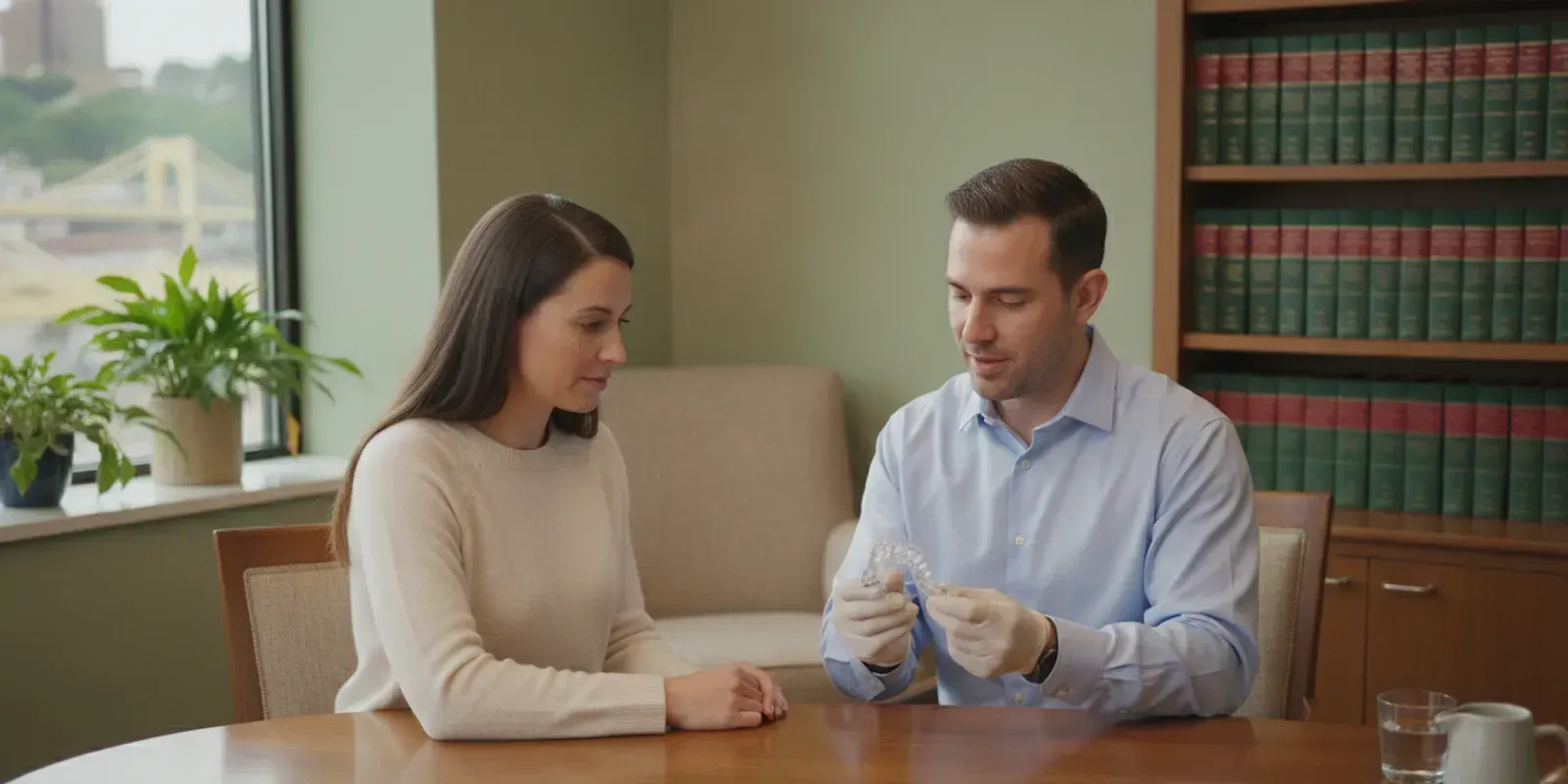
Request an appointment if a physician has already diagnosed obstructive sleep apnea and you want to talk about a custom oral appliance with this Pittsburgh-area practice.
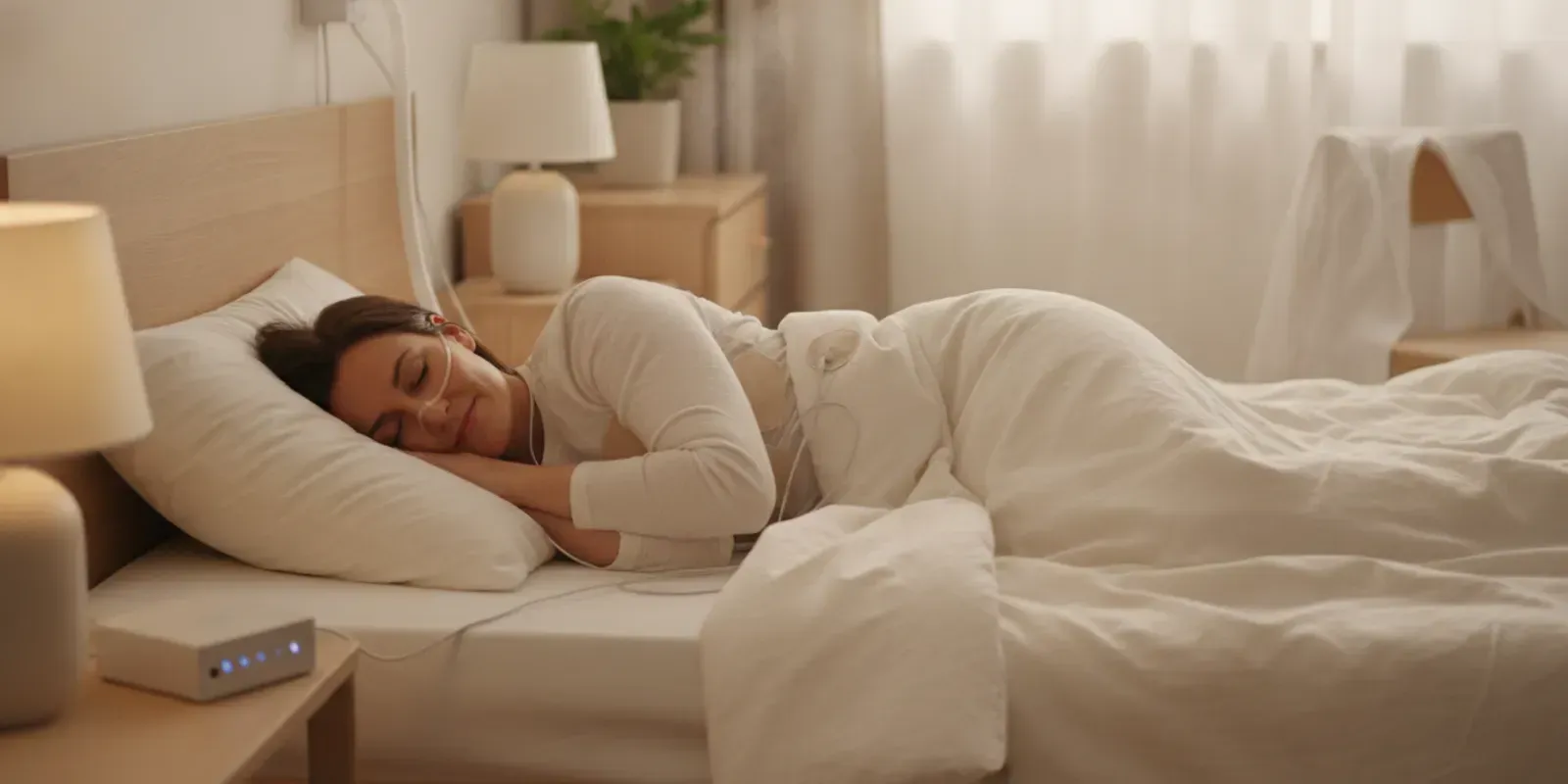
What is sleep apnea symptoms during the night?
The National Heart, Lung, and Blood Institute describes sleep apnea as breathing that stops and restarts many times during sleep. That can keep the body from getting enough oxygen. The same NHLBI symptoms page lists breathing that starts and stops, frequent loud snoring, and gasping for air as clues that often show up while a person is asleep. Many people do not notice those clues until someone else tells them.
A bed partner, roommate, or family member is often the first witness. They may hear snoring that is loud enough to leave the room. They may see the chest moving with little air moving, then a gasp or a choke. Some people wake themselves with a cough or a feeling that they were holding their breath. Others only notice a dry mouth or a full bladder and do not connect it to breathing.
Snoring by itself is not a diagnosis. The practice's sleep apnea education page describes snoring as air forced through a narrowed space when the jaw opens and the tongue falls back. Some people snore and still breathe all night. Others pause, gasp, and wake unrefreshed. A short education page can list those clues. It cannot tell you which group you are in.
Nighttime clues the practice's education page also names include waking with coughing, choking, or gasping, frequent overnight urination, and grinding of the teeth. Grinding is something a dentist may see on the teeth. It is not, by itself, proof of sleep apnea, and this practice does not treat grinding or jaw pain as a standalone service.
What you may notice while you are awake
Daytime clues are easier to miss because they look like ordinary tiredness. NHLBI lists daytime sleepiness and tiredness that can affect learning, focusing, and reacting. It also lists dry mouth, fatigue, headache, insomnia, and waking often at night to urinate.
NHLBI notes that fatigue, headache, and insomnia are reported more often in women, and that loud snoring is reported more often in men. It also lists sexual dysfunction or decreased libido. Those patterns are clues for a clinician, not a rule for every person.
The education page at Sleep Apnea Dental Center adds a few everyday versions of the same problem. People describe falling asleep while reading, watching television, or driving. They describe mood swings, poor sleep, morning headaches, and weight gain. None of those items proves a breathing disorder. Together, especially with witnessed pauses, they are a reason to talk with a physician.
Sleepiness behind the wheel deserves a direct conversation with a doctor, not a new pillow. So does sleepiness that makes work or school unsafe. Children are a separate topic. NHLBI says children with sleep apnea may be overactive and may have bedwetting, worsening asthma, or trouble paying attention. This practice cares for adults in the Pittsburgh area. Pediatric questions belong with a child's physician.
Why a symptom list cannot name the type
There are two main types, and symptoms do not sort them reliably. NHLBI says obstructive sleep apnea happens when the upper airway becomes blocked many times during sleep, reducing or stopping airflow. It says central sleep apnea happens when the brain does not send the signals needed to breathe. Obstructive sleep apnea is the more common type.
A pause that looks the same from the bedside can have either cause, or another cause entirely. That is why this practice's guide to obstructive vs central sleep apnea tells readers that testing, not a symptom checklist, identifies the type. This article stays on what to notice. It does not walk through how the two mechanisms differ in detail.
The education page describes obstructive sleep apnea as a blockage from the soft palate to below the base of the tongue, with waking, coughing, or gasping as the person tries to breathe again. That description matches the obstructive pattern. It is not a complete definition of every sleep apnea diagnosis, and it is not a test you can do at home.
Clues a partner notices versus clues you feel
It helps to write the two lists separately before an appointment. A partner's list is about what happens while you are asleep. Your list is about how you feel the next day. A physician can use both. Neither list replaces a sleep study.
| What someone else may notice | What you may feel | What it does not prove |
|---|---|---|
| Loud, frequent snoring. | Dry mouth on waking. | It does not prove that you have sleep apnea, or which type. |
| Breathing that starts and stops. | A morning headache or unrefreshing sleep. | It does not prove how serious the problem is. |
| Gasping, choking, or coughing at night. | Sleepiness while reading, watching TV, or driving. | It does not prove which treatment, if any, you need. |
| Restless sleep or repeated waking. | Trouble focusing, mood changes, or low energy. | It does not prove that an oral appliance or CPAP is the next step. |
What someone else may noticeWhat you may feelWhat it does not proveLoud, frequent snoring.Dry mouth on waking.It does not prove that you have sleep apnea, or which type.Breathing that starts and stops.A morning headache or unrefreshing sleep.It does not prove how serious the problem is.Gasping, choking, or coughing at night.Sleepiness while reading, watching TV, or driving.It does not prove which treatment, if any, you need.Restless sleep or repeated waking.Trouble focusing, mood changes, or low energy.It does not prove that an oral appliance or CPAP is the next step.
Bring the table, or a plain version of it, to the physician who already knows your health history. If nobody has watched you sleep, say that. Absence of a witness does not rule anything out. It only means one source of information is missing.
When symptoms should go to a physician first
NHLBI's advice is straightforward. If someone says you snore or gasp during sleep, talk with your healthcare provider. Ask about sleep apnea if you also have signs of poor sleep, such as too much daytime sleepiness.
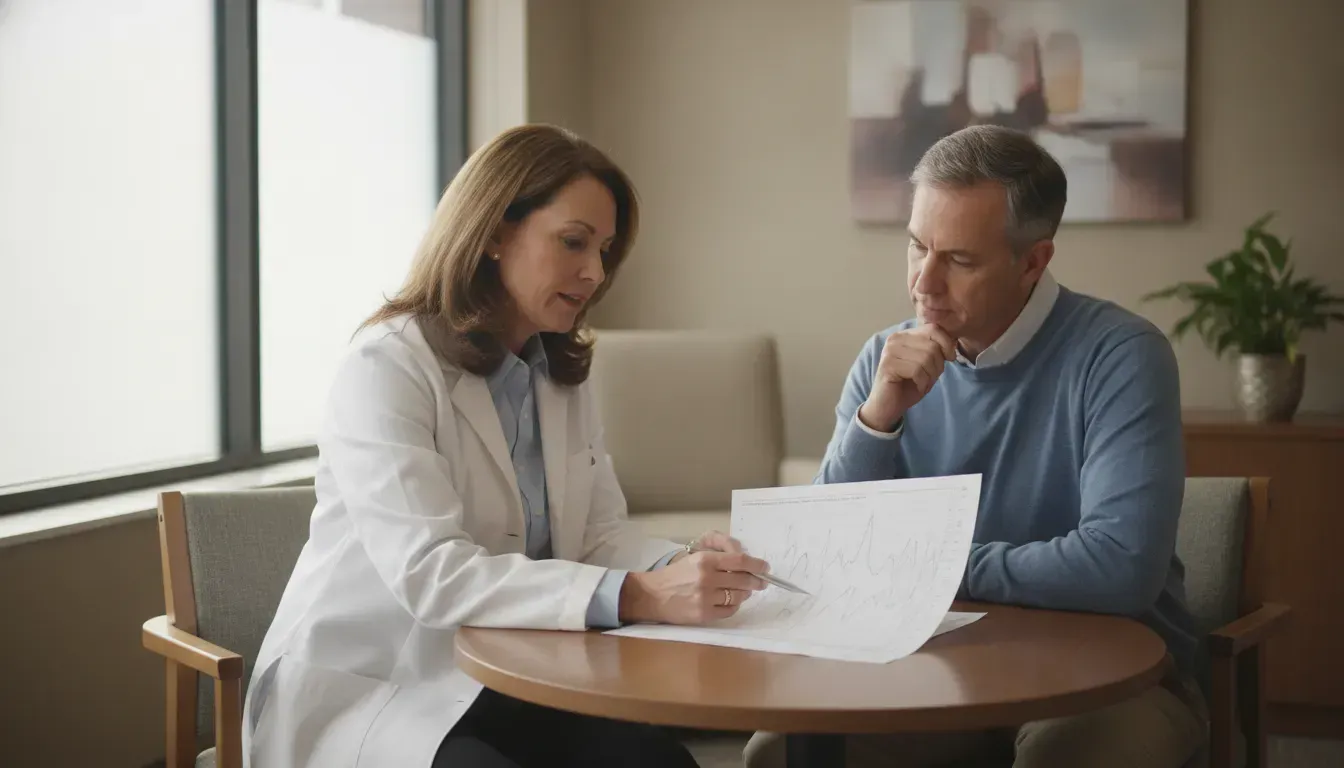
The provider asks about symptoms, risk factors, and family history, and may send you for a sleep study. A sleep study helps show which type is present and how serious it is. A sleep diary can add detail about how long you sleep and how sleepy you feel during the day.
Sleep Apnea Dental Center is not that first stop for an undiagnosed person. The practice does not diagnose obstructive sleep apnea and does not perform sleep studies. Formal care for apnea starts with a qualified physician's diagnosis. Non-apneic snoring is a separate path, and the practice offers it only after a sleep study has ruled apnea out. The guide on how to stop snoring covers that boundary. This article does not repeat the habit changes or the snoring-only pathway.
A specialist sleep doctor is the clinician who interprets testing and builds the medical plan. Ask that physician what the study showed before you compare devices. An apnea hypopnea index score is one piece of that report. Understanding the number is useful later. It is not something to estimate from how loud the snoring was.
What a symptom pattern does not decide
A long symptom list can feel like a verdict. It is not. NHLBI says treatment is discussed after a sleep study shows sleep apnea. Options a provider may raise include healthy habits, positive airway pressure, or an oral device to help keep the airway open during sleep. The right mix depends on the person. Nothing on a public webpage can choose it.
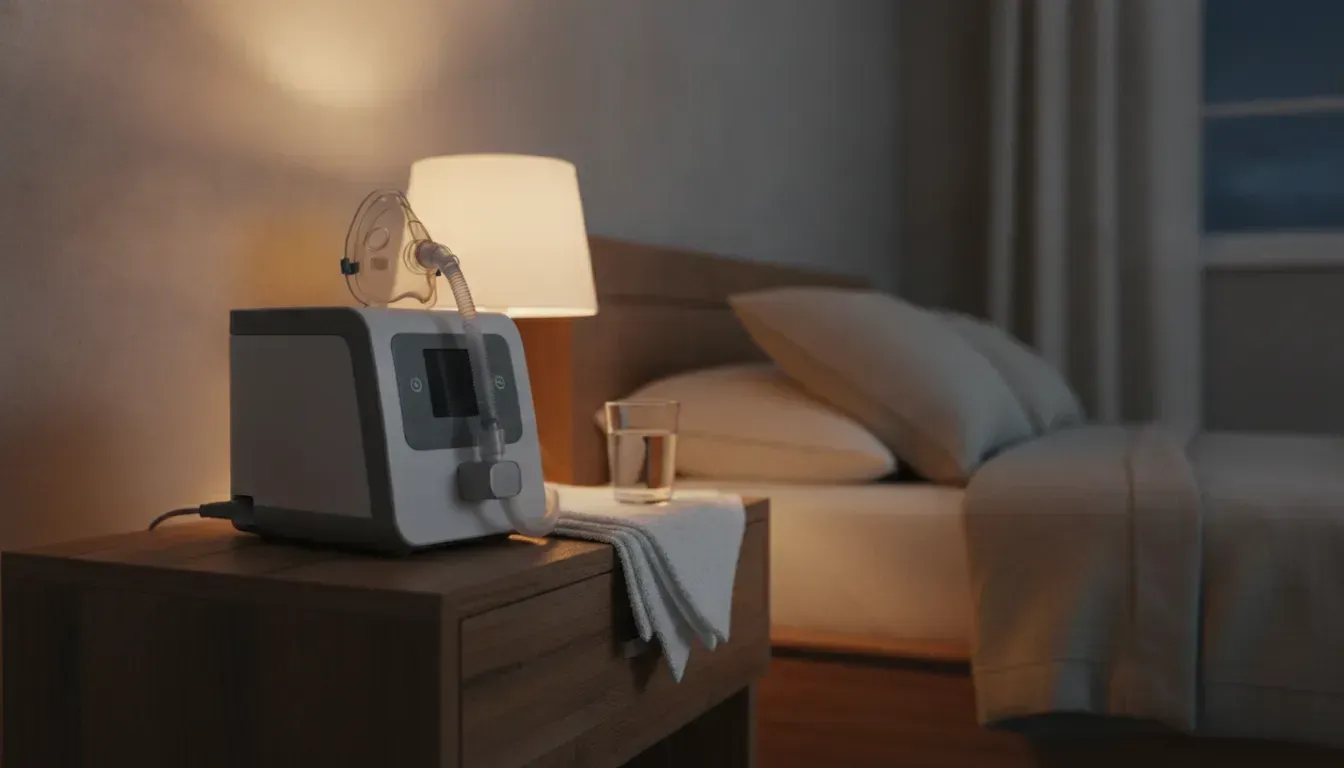
Positive airway pressure, including CPAP, is the treatment NHLBI calls the most common. An oral device may be prescribed if someone does not want CPAP or cannot tolerate it. NHLBI says a dentist or orthodontist can custom-fit that device and show the person how to use it. That referral comes after a diagnosis. It is not a shortcut around testing.
Sleep Apnea Dental Center provides custom oral appliances for people who already have a physician's diagnosis of obstructive sleep apnea. The practice describes those appliances as a first-line option for some diagnosed patients and as a simpler option for people who do not want CPAP, do not tolerate it, or travel often. An appliance is chosen for the individual. It is not a cure, and it is not a claim that CPAP is wrong for everyone.
The oral appliances page explains that a device worn during sleep repositions the lower jaw and tongue to help open the airway. Doctors at the practice also look at clenching, grinding, jaw discomfort, and headaches when they choose a device for a diagnosed patient. Those issues do not make an appliance appropriate before a sleep study. They also do not mean the practice treats jaw pain on its own.
How this Pittsburgh practice fits after a diagnosis
If a physician has already diagnosed obstructive sleep apnea, the next conversation can include whether a custom oral appliance belongs in the plan. Patients usually reach Sleep Apnea Dental Center after a doctor has referred them, then they request a visit. Staff follow up within one to two business days to set a time. That window is for scheduling. It is not a treatment timeline and it is not a promise that a device is already approved.
The practice sees patients at three offices, not at every office every weekday. Clinical hours run 8:30 a.m. to 3:30 p.m. on the days that office is open. Phone coverage is weekdays from 8:30 a.m. to 4:00 p.m. at (412) 367-0367.
Moon Township, at 200 Commerce Drive, Suite 203, sees patients on Wednesday and Thursday. Cranberry Township, at 20280 Route 19, Unit 6, third floor, sees patients on Monday, Tuesday, and Friday. Monroeville, at 118 Fox Plan Road, sees patients Wednesday through Friday.
Nicole Chenet, DDS, D-ABDSM, is the owner and a Diplomate of the American Board of Dental Sleep Medicine, as the practice reports it. Paige K. Murrer, DMD, and Kimberly Klein, DDS, are also presented as Diplomates.
Haley Brose, DMD, is presented as an American Academy of Dental Sleep Medicine Qualified Dentist who is pursuing Diplomate status. Not every doctor holds the same credential. A visit is with the clinician scheduled that day, not a guarantee of a specific doctor.
Veterans who already have a diagnosis and have trouble with CPAP can ask their VA primary-care or sleep physician about Community Care. Veteran status alone does not create covered care. A referral and an authorization letter still apply. The practice participates in that program. It does not decide VA eligibility.
What to write down before you call a doctor
A short record is more useful than a long worry. Use the last two weeks, not a single bad night. Note who saw or heard the nighttime events, because you may have slept through them.
- Write what a partner heard: snoring, pauses, gasping, choking, or coughing.
- Write what you felt: dry mouth, headaches, nighttime urination, unrefreshing sleep, or sleepiness while driving.
- Note medicines, recent travel to high altitude, and any prior sleep study.
- Bring the notes to your physician and ask whether a sleep study is appropriate.
- If that physician diagnoses obstructive sleep apnea and you want to discuss an appliance, request a visit with this practice.
Do not start, stop, or change a prescribed therapy because of an article. Do not buy a boil-and-bite guard and treat it as a medical device. The practice does not offer MyTAP, and a store device is not the custom care described on the site.
Related health issues are a reason to be evaluated
The education page lists conditions people often see discussed next to snoring and sleep apnea, including high blood pressure, heart disease, diabetes, depression, and acid reflux. NHLBI links obstructive sleep apnea with high blood pressure. Treatment does not promise that blood pressure will fall.
Those associations are a reason to involve a physician. They are not a promise that treating sleep apnea will fix another disease, and they are not a reason to skip the diagnosis step.
Weight, age, family history, and features of the neck or tongue can raise risk, according to NHLBI. Some of those factors can change and some cannot. Risk is not the same as a diagnosis. A person with several risk factors and no symptoms may still need a doctor's judgment. A person with clear gasping and few risk factors may too.
If you already know your diagnosis and you are comparing CPAP with an oral appliance, use the treatment pages on this site after you have talked with the physician who ordered the study. Coverage questions belong on the insurance page.
That page says oral appliances can fall under medical coverage when sleep apnea is diagnosed, including mild, moderate, and severe. The practice checks approval before the visit so you can hear about out-of-pocket cost. Approval is not a guarantee of payment, and this article does not quote a price.
Frequently asked questions
Do these symptoms mean I have sleep apnea?
No. Snoring, gasping, and daytime sleepiness are reasons to ask a physician about testing. They do not diagnose sleep apnea, and they do not show whether the cause is obstructive or central. Only a qualified clinician, using the right study and your history, can make that call.
Can I tell the type from how I snore?
No. Obstructive and central events can look similar to someone watching you sleep. The published comparison on this site explains why the type has to come from testing. Guessing the type is not a safe way to choose CPAP, an implant, or an oral appliance.
Should I request a dental visit before a sleep study?
Not for an undiagnosed breathing problem. Sleep Apnea Dental Center does not diagnose sleep apnea and does not run sleep studies. Call the practice after a physician has diagnosed obstructive sleep apnea, or after a study has ruled apnea out and you are asking about non-apneic snoring.
Are morning headaches and grinding enough to start an appliance?
No. The practice can consider clenching, grinding, jaw discomfort, and headaches when it chooses an appliance for someone who already has a diagnosis. Those problems are not a standalone treatment here, and they are not a substitute for a sleep evaluation.
What if I already failed CPAP?
Tell the physician who manages your sleep apnea. NHLBI says a provider may prescribe an oral device when someone does not want CPAP or cannot tolerate it. If that physician agrees an appliance is appropriate, you can request an appointment at one of the three Pittsburgh-area offices. Tolerance problems do not, by themselves, create a diagnosis or a covered device.
If a physician has diagnosed obstructive sleep apnea and you want to ask about a custom oral appliance, request an appointment or call (412) 367-0367. If you have symptoms and no diagnosis yet, start with your physician.