
What Is an Oral Appliance for Sleep Apnea?
What is an oral appliance for sleep apnea? A plain-language look at the custom device, what it is not, and the next step in Pittsburgh.

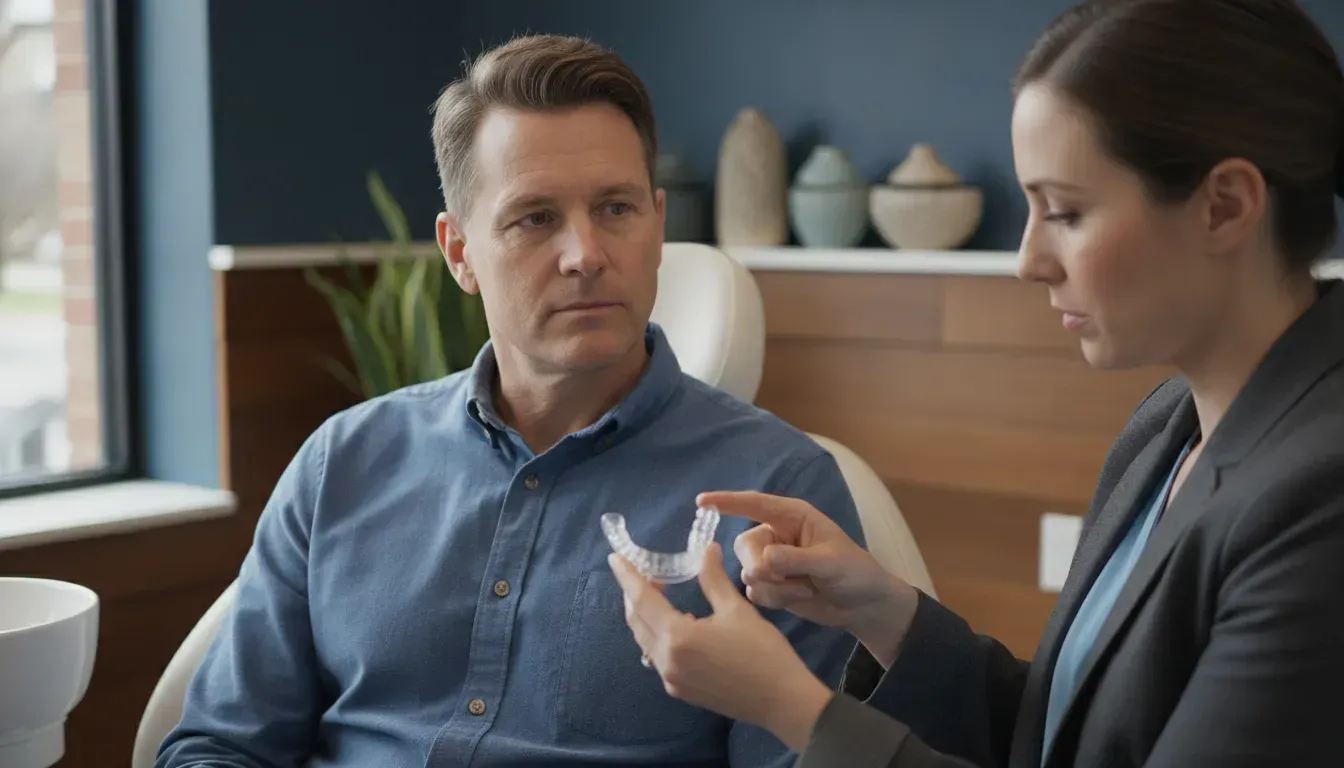
If you just heard the phrase and want a plain answer, an oral appliance for sleep apnea is a custom device you wear in your mouth while you sleep. It is made for your teeth and jaw. It is not a sports mouthguard, and it is not the mask and machine people mean when they say CPAP.
The National Heart, Lung, and Blood Institute describes these devices as a way to help keep the airway from blocking during sleep. That description usually follows a sleep study that has already shown sleep apnea. The device does not create the diagnosis. The NHLBI treatment overview is the public source for that description, updated January 9, 2025.
Call (412) 367-0367 to ask about an oral appliance
Sleep Apnea Dental Center uses that kind of device in Moon Township, Cranberry Township, and Monroeville. A doctor at the practice chooses the appliance for the person in the chair. The office does not diagnose obstructive sleep apnea, and it does not run the sleep study. A physician does that first. This page is the short version of what the device is. The longer story of fitting, follow-up, and who it may suit lives on a separate guide.
What is an oral appliance for sleep apnea, in plain words?
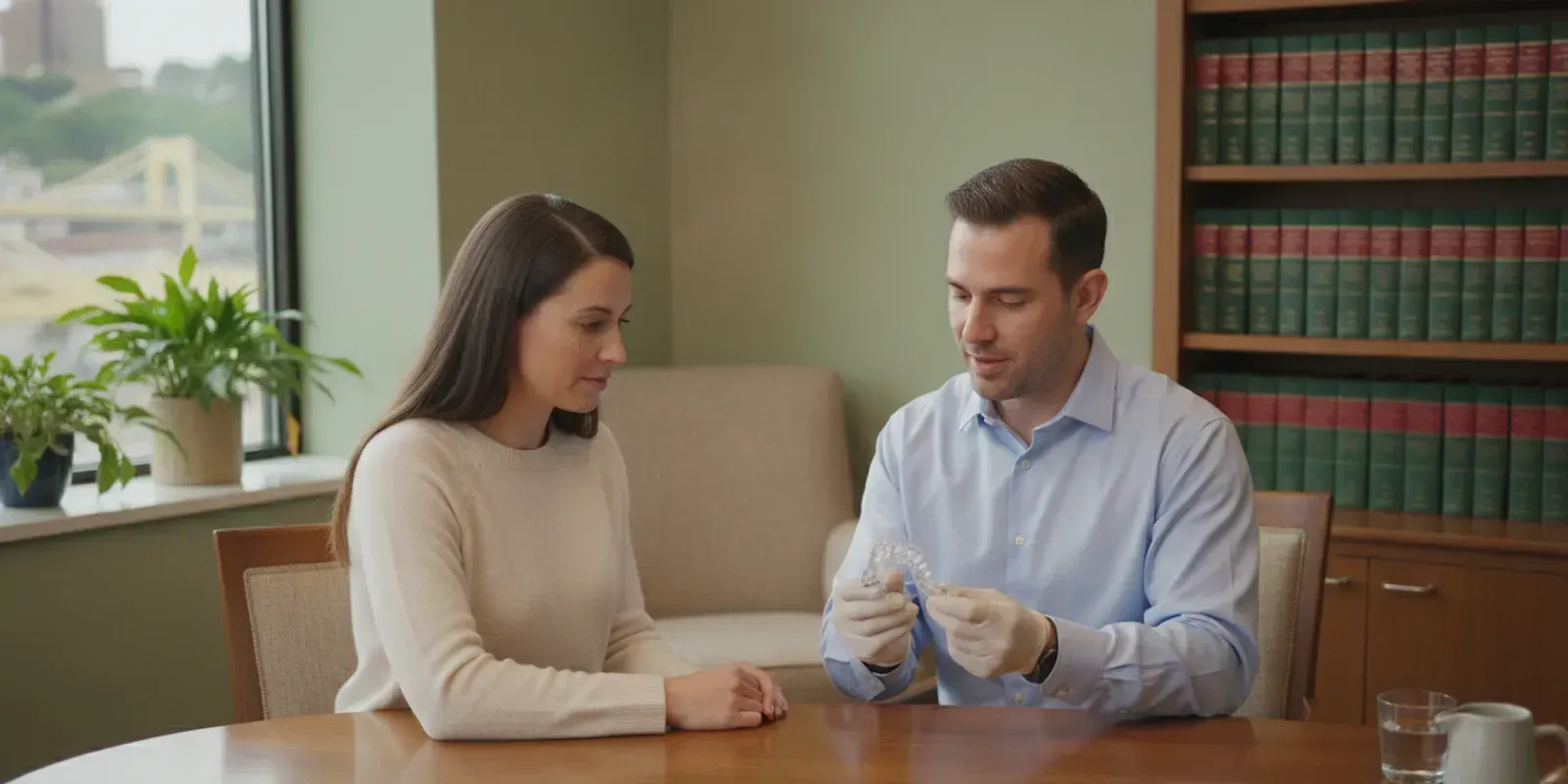
Think of it as a small dental device you put in at bedtime and take out in the morning. It stays in the mouth only while you sleep. The NHLBI calls these products oral devices or oral appliances, and it says a dentist or orthodontist custom fits the one a provider prescribes. The point is comfort and a fit that matches your mouth, not a one-size tray from a pharmacy shelf.
On the practice's oral appliance treatment page, the device is described the same way patients hear it in the office. It is worn in the mouth during sleep. It repositions the lower jaw and tongue so the airway can stay more open.
The page says that shift tenses the muscles that support the airway, which can let air move with less blockage. That is the idea. It is not a promise that every night, or every person, will respond the same way.
Two shapes show up again and again in public explanations. A mandibular repositioning mouthpiece covers the upper and lower teeth and holds the lower jaw so it does not slide backward and block the airway. A tongue-retaining device holds the tongue forward so the tongue itself is less likely to block the airway. The NHLBI treatment page names both. Which idea fits a person is a clinical choice, not a shopping choice.
People also ask whether the device is "the" oral appliance, as if one model were standard. It is not. The practice says one of the doctors picks what best matches the person's issues, including clenching, grinding, jaw discomfort, and headaches. That selection is part of care. It is not a catalog you order from a photo.
What the device is not
A lot of confusion starts with the word mouthguard. A store guard can be molded in hot water and worn for sports or for grinding. An oral appliance for sleep apnea is built from your own teeth and then adjusted by a dentist who works with sleep apnea care. A boil-and-bite tray is not the same object, and a quieter night from a store guard is not proof that breathing pauses are under control.
It is also not CPAP. CPAP, a common form of positive airway pressure, uses a mask and a flow of air to hold the airway open from the outside. An oral appliance works from inside the mouth, by the position of the jaw or the tongue. The NHLBI lists both among treatments a provider may discuss after a sleep study. Neither one is described there as a cure, and neither one is described as the right choice for every person.
It is not a diagnosis. Snoring can be a sign that the airway is narrow, and the education page on this site says snoring is sometimes a red flag for obstructive sleep apnea. Snoring by itself is not that diagnosis. The practice will talk about an appliance for snoring that is not apnea only after a sleep study has ruled apnea out. If you have not had a study, the next step is a physician, not a device.
And it is not a substitute for the rest of care. Healthy sleep habits, side sleeping, weight, alcohol, and other treatments can all be part of what a physician recommends. An appliance is one tool in that conversation. It does not replace the physician who ordered the study, and it does not replace follow-up to see whether breathing events actually changed.
How a custom appliance is different from a store guard
The difference is easier to see side by side than in a slogan. Use this as a map of the words, not as a verdict about which option you should use.
| Question | Custom oral appliance | Store mouthguard |
|---|---|---|
| What is it made for? | Your teeth and jaw, for sleep, after a clinician chooses it. | A general fit, often for sports or grinding, sold off the shelf. |
| Who decides the shape? | A dentist trained in this care, using your exam and your diagnosis. | You, from a package, with no exam of your airway or bite. |
| What is it trying to do at night? | Hold the jaw or tongue so the airway is less likely to block. | Cover teeth. It is not a prescribed apnea treatment. |
| What has to happen first? | A physician's sleep apnea diagnosis, or a study that rules apnea out before non-apneic snoring care. | Nothing clinical. That is the problem if apnea is the real question. |
QuestionCustom oral applianceStore mouthguardWhat is it made for?Your teeth and jaw, for sleep, after a clinician chooses it.A general fit, often for sports or grinding, sold off the shelf.Who decides the shape?A dentist trained in this care, using your exam and your diagnosis.You, from a package, with no exam of your airway or bite.What is it trying to do at night?Hold the jaw or tongue so the airway is less likely to block.Cover teeth. It is not a prescribed apnea treatment.What has to happen first?A physician's sleep apnea diagnosis, or a study that rules apnea out before non-apneic snoring care.Nothing clinical. That is the problem if apnea is the real question. Sleep Apnea Dental Center's doctors look at the person, not a default model. Nicole D. Chenet, DDS, D-ABDSM, the owner, Paige K. Murrer, DMD, and Kimberly Klein, DDS, are Diplomates of the American Board of Dental Sleep Medicine. Haley Brose, DMD, is an AADSM Qualified Dentist, not a Diplomate. Credentials stay with the clinician who holds them.
If you want the longer comparison of how an appliance and CPAP each treat breathing events, that is a different article: how oral appliances compare with CPAP. This page stops at what the device is.
Where an oral appliance sits in care
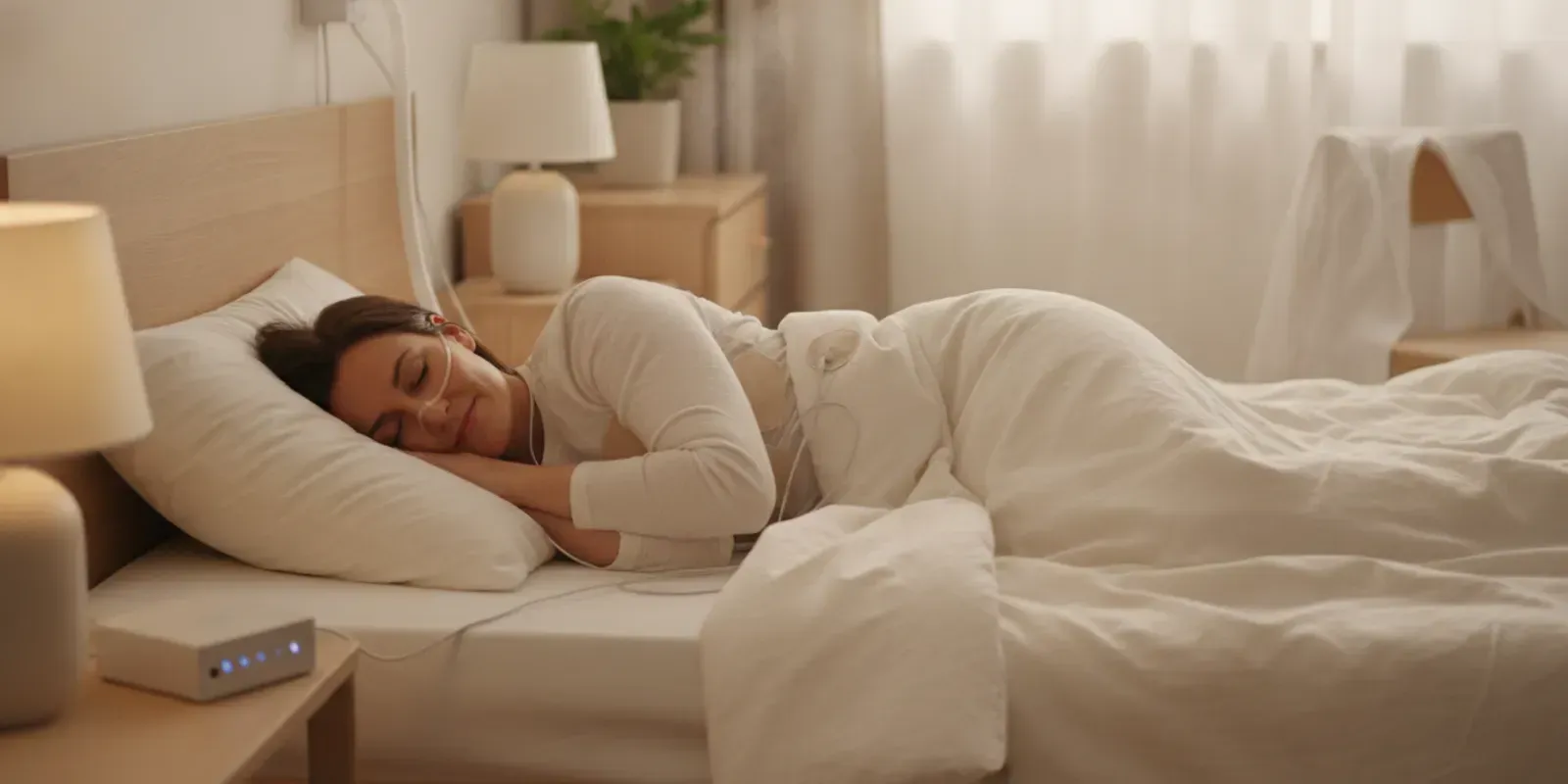
The sequence is the part people skip. A physician orders a sleep study. The study is what shows whether obstructive sleep apnea is present and how often breathing pauses. Only after that diagnosis does this office talk about a custom appliance as part of care.
The NHLBI lists oral devices with other treatments a provider may discuss once sleep apnea is known. That includes someone who does not want CPAP or cannot tolerate it. The list is a menu of options, not a ranking.
That last point is easy to overread. The practice describes an appliance as an option for people who have trouble with CPAP, chosen for the individual. It does not say CPAP is wrong for everyone, and it does not say an appliance replaces CPAP in every case. Some people stay on CPAP. Some people ask about an appliance because travel, the mask, or nightly use has been hard. The fit still depends on the diagnosis, the teeth, and the jaw.
A sleep apnea dentist's job, once that diagnosis exists, is the dental side. The dentist looks at teeth, bite, and jaw comfort, then may provide and adjust a custom appliance. The dentist does not take over the physician's role. If you want that role spelled out, read what a sleep apnea dentist does.
Non-apneic snoring is a separate door. The oral appliances page says the doctors can treat snoring that is not tied to sleep apnea. Those patients still need a sleep study first so apnea is not missed. Do not fold that into the apnea pathway. One is care after a diagnosis. The other is snoring care only after apnea has been ruled out.
What people in the Pittsburgh area usually ask first
The first questions are usually simple. They deserve a short answer before anyone talks about visits, devices, or whether a plan might help.
- Is it the same as a night guard? No. A night guard and a sports guard are not a prescribed oral appliance for sleep apnea.
- Do I have to be "severe" to ask? No. The insurance page says oral appliances fall under medical coverage when sleep apnea is diagnosed, including mild, moderate, and severe. That is a coverage category, not a promise that a plan will pay.
- Can I buy one online? A custom device from this practice is made for you after a clinician chooses it. A shipped tray is not that visit.
- Will it fix sleep apnea for good? No. Treatment is individualized. Nothing on this site, and nothing on the NHLBI treatment page, describes an appliance as a cure.
- Does the office diagnose me? No. The practice does not diagnose obstructive sleep apnea and does not run sleep studies.
Insurance is the question that grows fastest. The live insurance page says the office checks medical-insurance approval before the visit so you know about out-of-pocket cost. Approval is not a guarantee of payment.
The homepage says the practice participates with major medical plans, including UPMC, Blue Cross networks, Aetna, Cigna, Medicare, and others. It also names CareCredit as a payment option, without listing terms. A plan list is not a coverage rate. There is no published share of patients, and there is no fee schedule to quote.
Veterans sometimes ask the same first question. The practice says it participates in VA Community Care. A veteran who already has a diagnosis and has had trouble with CPAP still starts with a VA primary-care or sleep physician for the referral. Veteran status, or requesting a visit, does not by itself create covered care.
What happens if you ask this office
A request is not a booked appointment. You can call (412) 367-0367 or use the request form. Staff contact you within one to two business days to set a time. That window is about scheduling the conversation. It is not a treatment wait, and it is not how long a device takes to make.
Clinical time is not the same at every office, and it is not every weekday at each one. Moon Township, at 200 Commerce Drive, Suite 203, sees patients on Wednesday and Thursday. Cranberry Township, at 20280 Route 19, Unit 6 on the third floor, sees patients on Monday, Tuesday, and Friday.
Monroeville, at 118 Fox Plan Road, sees patients Wednesday through Friday. Clinical hours on those days run from 8:30 a.m. to 3:30 p.m. Phones are answered weekdays from 8:30 a.m. to 4 p.m. Offices are closed Saturday and Sunday.
Bring the sleep study and the physician's diagnosis if you already have them. If you do not, say so. The useful first call is the one that sorts out whether you are asking about appliance care after apnea, or about snoring that still needs a study. Referring physicians and dentists can also send patients here. The referral fax is (412) 367-0366. A brochure request is not the same thing as a patient referral.
When an appliance is part of the plan, the doctor at Sleep Apnea Dental Center matches it to the person. Some people also clench or grind. Some have jaw discomfort or headaches. The practice says it can account for those issues when it chooses a device. That is still not a claim that the appliance treats jaw pain or headaches on their own. Those symptoms are part of choosing a fit, not a separate service line.
ProSomnus is one manufacturer of custom oral appliances. Naming it only says who makes some of the devices used in this kind of care. It is not a statement that one brand is stocked for everyone, that a plan covers it, or that it is the right shape for you.
How to read the next pages without going in circles
Once you know what the device is, the rest of the site answers different questions. Use the pages below in order if you are still getting oriented, and skip any step you already understand.
- Read the short practice description of oral appliance treatment if you want the office's own wording on jaw position, CPAP difficulty, and non-apneic snoring.
- Read what this office means by sleep apnea and snoring if you are still separating ordinary snoring from a breathing problem that needs a study.
- Read the insurance page before you assume a dollar amount. It explains medical coverage when apnea is diagnosed, and it explains the pre-visit approval check. It does not list prices.
- Leave fitting, adjustment, side effects, and follow-up sleep testing to the therapy guide. That article is about how care proceeds, not about the definition you came here for.
High blood pressure shows up on the education page as a condition associated with snoring and sleep apnea. That is a reason to talk with a physician. It is not a result this office promises from an appliance. Treatment does not come with a guarantee that blood pressure will fall, that snoring will stop, or that every breathing pause will disappear.
Some ads describe a device as a cure, a universal CPAP replacement, or something you can pick like a phone case. That description does not match how this practice works. The device is custom. The diagnosis comes first. The dentist and the physician stay in their own lanes.
A simple way to decide what to do next
You do not need a long checklist. Three questions sort almost everyone who asks what an oral appliance for sleep apnea is, before they book anything.
- Has a physician already diagnosed obstructive sleep apnea, with a sleep study behind that diagnosis? If yes, an appliance can be part of the conversation, especially if CPAP has been hard to use. If no, start with the physician, not with a dental device.
- Are you hoping a store guard will do the same job? If yes, pause. A custom appliance is fitted to your mouth and chosen by a dentist. A retail guard is a different product.
- Do you already know you want the longer version, meaning who it may help, how visits go, and how results get checked? If yes, use the therapy guide after this page. This article is only the definition and the next step.
People searching from Moon, Cranberry, Monroeville, or about an hour out, toward communities such as Weirton or Washington County, can request a visit at any of the three offices. The phone number is the same. The clinical days are not. Check the office you want before you assume a weekday is open there.
Nothing here says an appliance is safe for every mouth, effective for every severity, or covered by every plan. Jaw comfort, dental work, and the sleep study all matter, and they are handled at a visit, not in an article. If something you read elsewhere promises a cure or a price, treat that as a claim this practice does not make.
Frequently asked questions
What is an oral appliance for sleep apnea?
It is a custom device worn in the mouth during sleep to help keep the airway from blocking. Public explanations, including the NHLBI treatment page, describe two common ideas: one holds the lower jaw forward, and one holds the tongue forward. Sleep Apnea Dental Center provides clinician-selected custom appliances. It does not sell a single off-the-shelf model.
Is an oral appliance the same as a mouthguard?
No. A sports guard or a boil-and-bite night guard is not a prescribed sleep apnea appliance. The device used here is made for your teeth and chosen by a doctor at the practice. That comes after a physician has diagnosed obstructive sleep apnea, or after a study has ruled apnea out for non-apneic snoring care.
Do I need a sleep study before I ask about one?
Yes, if the question is apnea treatment. This office does not diagnose obstructive sleep apnea and does not run sleep studies. A physician does. Snoring care that is not apnea also waits on a study, so apnea is not missed. You can still call and ask which door you are in.
Does insurance cover an oral appliance?
The practice's insurance page says oral appliances fall under medical coverage when sleep apnea is diagnosed, including mild, moderate, and severe. The office checks approval before the visit so you can hear about out-of-pocket cost. That check is not a promise that every plan pays, and this page does not state a coverage rate.
Can an oral appliance replace CPAP for everyone?
No. CPAP and an oral appliance work differently. An appliance is one option the practice describes for people who have trouble tolerating CPAP. It is not presented as a cure, and it is not presented as the right device for every person or every severity. Your physician and the dentist sort that out from your study and your exam.
Call (412) 367-0367 to request an appointment.
If you already have a diagnosis and want to know whether a custom appliance is even the right kind of device to ask about, start with a phone call or the request form. Staff will follow up within one to two business days. Bring the study if you have it. If you do not have one yet, they can point you back to the physician step before anyone talks about a device.